


EMERGENCY STARTING
- Warm up the engine for about 5 minutes.
Operating the engine at high RPM or “wide open throttle” immediately after starting the engine without allowing the engine to warm up may cause engine failure.
Always allow the engine to warm up sufficiently before operating it at high speeds.
Cooling water check
As soon as the engine starts, water should spray out of the pilot water hole 1, indicating that the water pump and cooling system are working properly. If you notice that water does not spray out of the pilot water hole, stop the engine as soon as possible and consult your authorized Suzuki Marine Dealer.
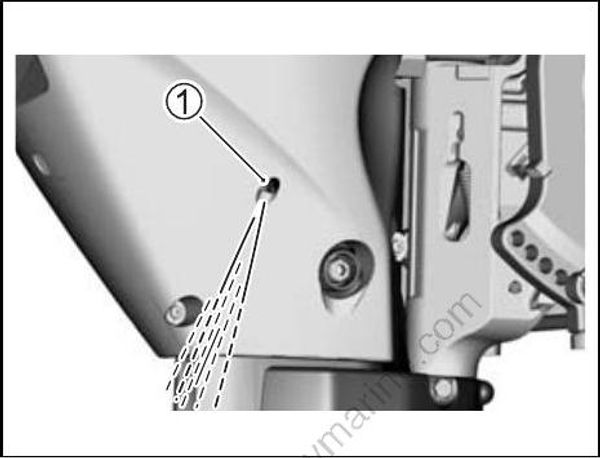
Never operate your outboard motor when there is no water coming out of the pilot water hole, or severe damage can result.
After starting the engine, check to make sure that there is water coming out of the pilot water hole.
Operating the boat when the emergency stop switch is not operating properly can
be hazardous.
Before starting off, check to make sure that the emergency stop switch operates properly
The electric starter models are equipped with a recoil starter as the back-up system for emergency starting. Therefore, an additional emergency starter rope is not provided. If the recoil starter is used for routine starting of the electric starter models, you must obtain a piece of rope to keep in the tool kit, so you can use the following procedure to start the engine in an emergency.
If you must get the engine running, but are unable to do so because of recoil starter failure, you can use the emergency starting procedure to start the engine.
If you touch electrical components when rope-starting the engine, you can get a severe electrical shock.
When rope-starting the engine, be careful not to touch electrical components such as ignition coils or spark plug leads.
- Make sure that the motor is in “NEUTRAL” and the emergency stop switch lock plate is removed.
When you use the emergency starting procedure, the start-in-gear protection
system will not work. If the shift lever is not in the “NEUTRAL” position, the boat can start off unexpectedly when the engine is started, throwing occupants or causing an accident.
Make sure that the shift lever is in the “NEUTRAL” position before attempting to start the motor using the emergency starting procedure
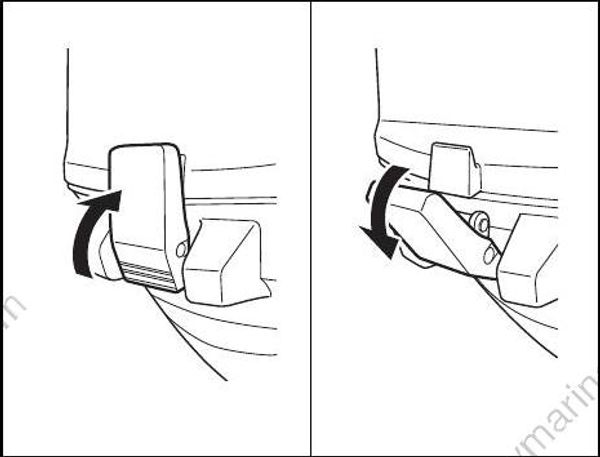
- Remove the motor cover by moving the lock lever in the direction of the arrow and lifting the cover off.
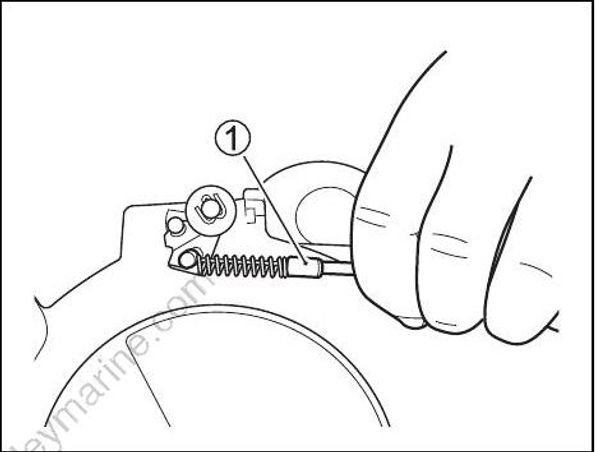
- Remove the NSI cable (1) from the recoil starter.
- Remove the two bolts securing the silencer in place. Remove the silencer.
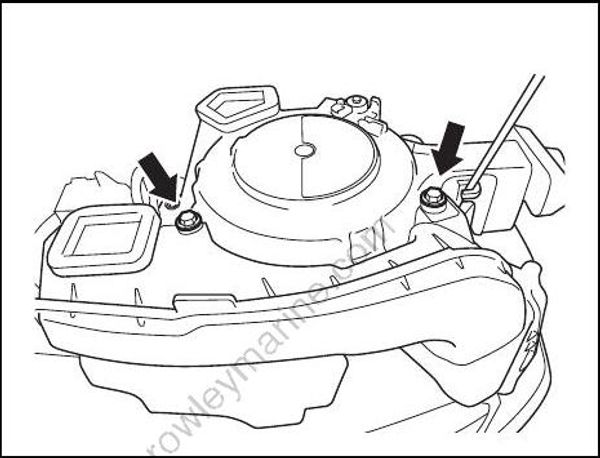
- Remove the four bolts securing the recoil starter assembly and timing belt cover in place.
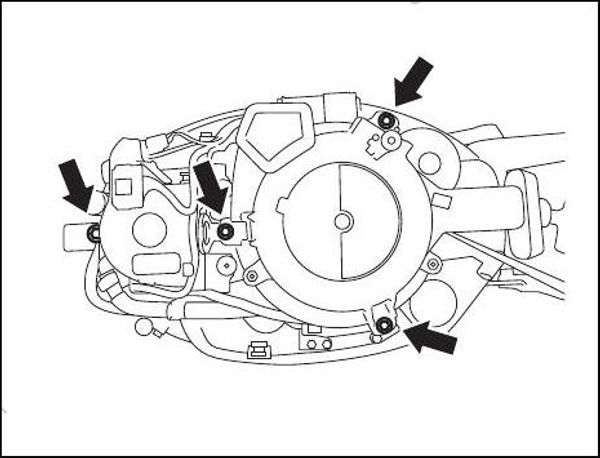
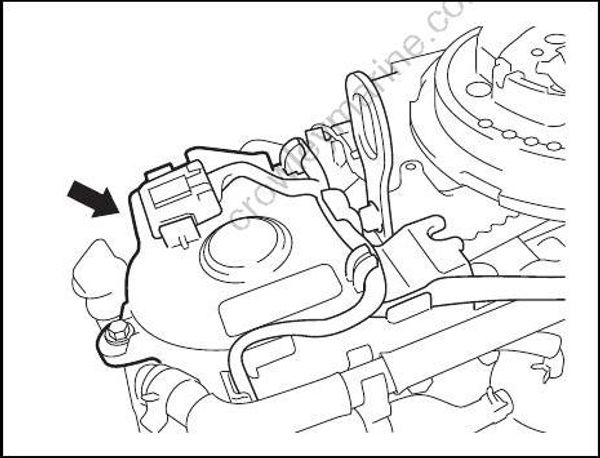
Disconnect the recoil starter assembly from the timing belt cover and lift the recoil starter assembly.
Reinstall the timing belt cover and secure it with a bolt.
- Secure the NSI cable with suitable rope as shown.
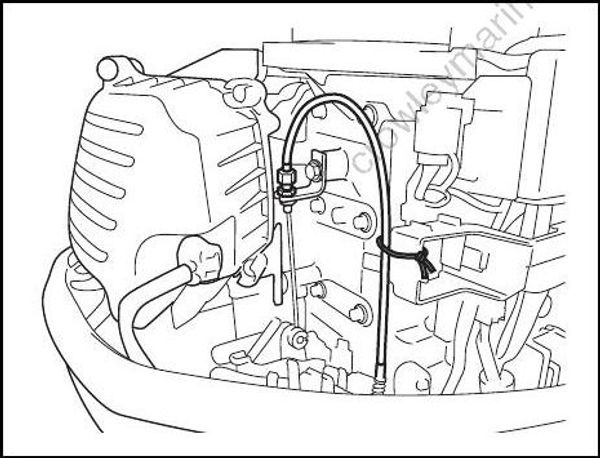
Make sure that the wire harness do not touch to the flywheel and the timing belt.
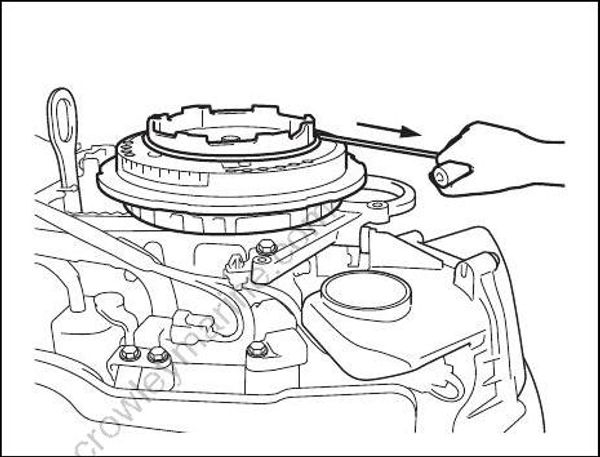
Tie a knot in one end of the emergency starter rope located in the tool kit. Tie the other end around the screw-driver handle in the tool kit.
Hook the knotted end of the rope in the pulley notch and wind the rope around the pulley in a clockwise direction.
Put the emergency stop switch lock plate in place.
Remote control model:
Turn the ignition key to the “ON” position.
- After following steps for normal starting procedure, pull the emergency starter rope sharply to start the engine.
If you attempt to reinstall the recoil starter assembly or motor cover after starting the engine you can be injured.
Do not attempt to reinstall the recoil starter assembly or motor cover after starting the engine.
When the engine is running, there are many moving parts that could cause severe personal injury.
When the engine is running, keep your hands, hair, clothing, etc., away from the engine.
Be sure to have the starter system repaired as soon as possible. You should not continue to use the emergency starting procedure for routine engine starting