


Operation
Failure to properly attach the emergency stop switch cord or to take proper precautions to help ensure that the emergency stop switch works as intended may result in serious injury or death to the operator or passengers.
Always take the following precautions:
• Make sure that the emergency stop switch cord is fastened securely to the operator’s wrist or to an appropriate clothing area (belt etc.).
• Ensure that no obstructions impede or restrict emergency stop switch operation.
• Be careful not to pull the stop switch cord or knock out the lock plate during normal operation. The motor will stop abruptly, and the loss of forward motion may unexpectedly throw occupants forward.
There is a spare plastic lock plate for temporary use only. Remove it from the cord and place in a safe place on the boat. However, the original cord and lock plate should be replaced as soon as possible.
STARTING THE ENGINE
Exhaust gas contains carbon monoxide, a dangerous gas that is difficult to detect because it is colorless and odorless. Breathing carbon monoxide can cause death or severe injury.
Never start the engine or let it run indoors or where there is little or no ventilation.
• If the engine fails to start, check the emergency stop switch lock plate. If the lock plate is not in position, the engine cannot be started.
• The starter motor can operate even with the lock plate not in position; however, the engine cannot be started.
Perform the following prior to starting if your motor is brand-new or there is no fuel in the fuel tank:
Fill the fuel tank with fresh gasoline.
Squeeze the fuel line priming bulb several times until you feel resistance.
Pull the starter grip sharply several times or operate the starter motor to fill the fuel line with fuel, then follow the normal starting procedure steps.
Start the engine using one of the starting procedures described below:
TILLER HANDLE MODEL
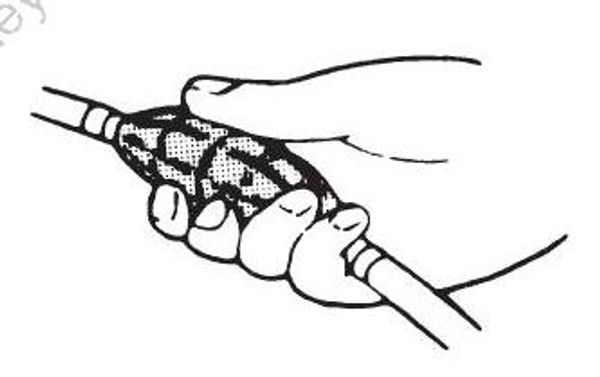
- Squeeze the fuel line priming bulb several times until you feel resistance.
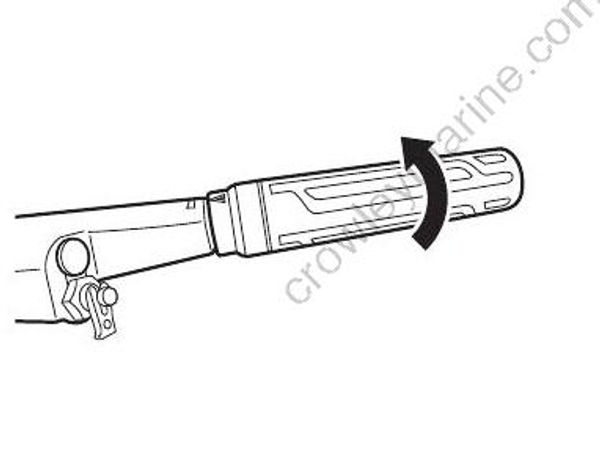
- Make sure that the throttle control grip is in the fully closed position.
a) Recoil starter model
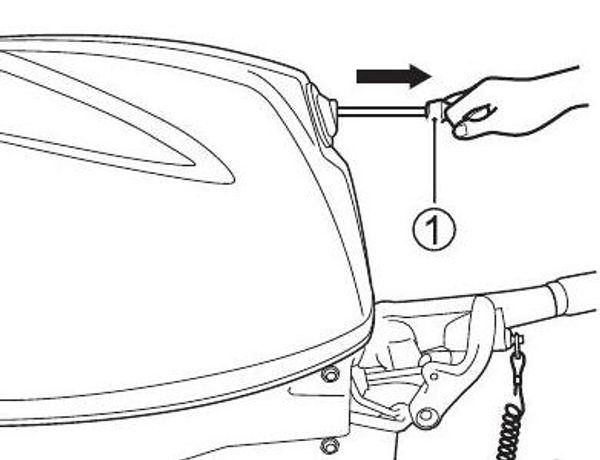
Firmly grasp the starter grip (1) and pull slowly until resistance is felt. When you feel it engage, pull the rope sharply to start the engine. Do not release the rope when it is pulled out. Hold the rope and allow it to recoil slowly.
If the battery cables are not connected to a battery and they contact each other while the engine is running, it could cause electrical system damage and could present a fire hazard.
If you are not using a battery with an electric starter models, you must insulate the terminal ends of the battery cables so that they will not touch each other.
If you pull the starter grip while the engine is running, the starter system can be damaged.
Never pull the starter grip while the engine is running.
b) Electric starter model
Push the starter button (2).
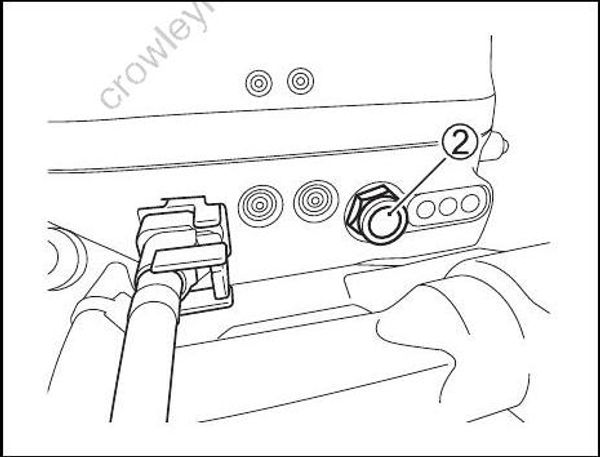
If you push the starter button for more than 5 seconds, the starter system could be damaged.
Never push the starter button for more than 5 seconds.
If you push the starter button while the engine is running, the starter system could be damaged.
Never push the starter button while the engine is running.
If the engine fails to start after 5 seconds, wait 10 seconds and try again.
If the Caution System is not working properly, you may not be alerted to a condition that can cause damage to your outboard motor.
If the caution lamp does not come on briefly once the starter system is operated, the caution lamp may be broken or a failure may exist in the system circuit. Consult your authorized Suzuki marine dealer.
- Warm up the engine for about 5 minutes.
Operating the engine at high RPM or “wide open throttle” immediately after starting the engine without allowing the engine to warm up may cause engine failure.
Always allow the engine to warm up sufficiently before operating it at high speeds.
REMOTE CONTROL MODEL
- Squeeze the fuel line priming bulb several times until you feel resistance.
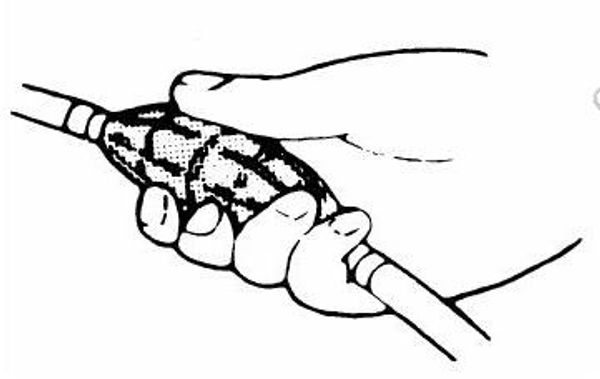
- Make sure that the warm-up lever is in the fully closed position.
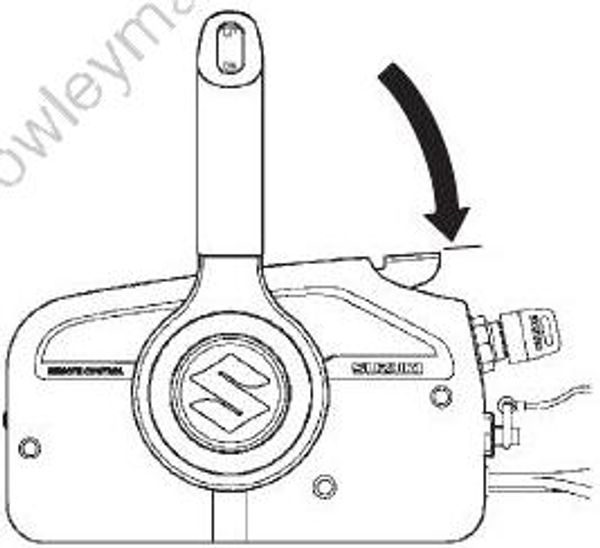
- Turn the ignition key to the “ON” position.
- Turn the ignition key to the “START” position.
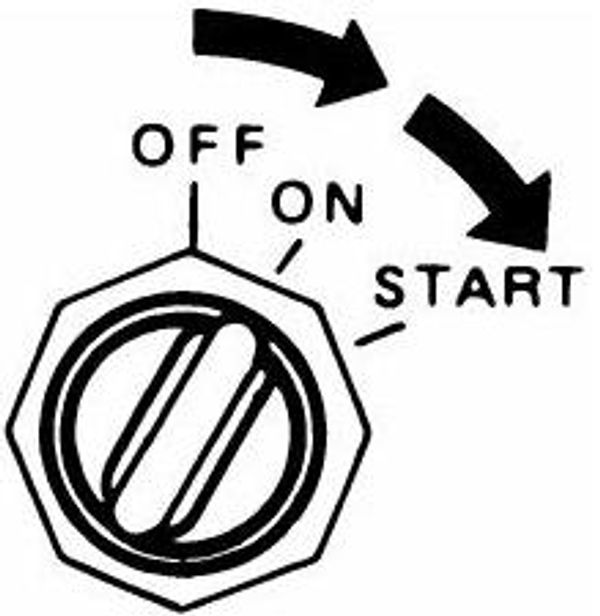
If you turn the ignition key to the “START” position for more than 5 seconds, the starter system could be damaged.
Never turn the ignition key to the “START” position for more than 5 seconds.
If you turn the ignition key to the “START” position while the engine is running, the starter system could be damaged.
Never turn the ignition key to the “START” position while the engine is running.
If the engine fails to start after 5 seconds, wait 10 seconds and try again.
If the Caution System is not working properly, you may not be alerted to a condition that can cause damage to your outboard motor.
If the caution lamp does not come on or the buzzer does not sound when the ignition key is turned on, the caution lamp or buzzer may be broken or a failure may exist in the system circuit. Consult your authorized Suzuki marine dealer.
- Warm up the engine for about 5 minutes.
Operating the engine at high RPM or “wide open throttle” immediately after starting the engine without allowing the engine to warm up may cause engine failure.
Always allow the engine to warm up sufficiently before operating it at high speeds.
Cooling water check
As soon as the engine starts, water should spray out of the pilot water hole (1), indicating that the water pump and cooling system are working properly. If you notice that water does not spray out of the pilot water hole, stop the engine as soon as possible and consult your authorized Suzuki Marine Dealer.
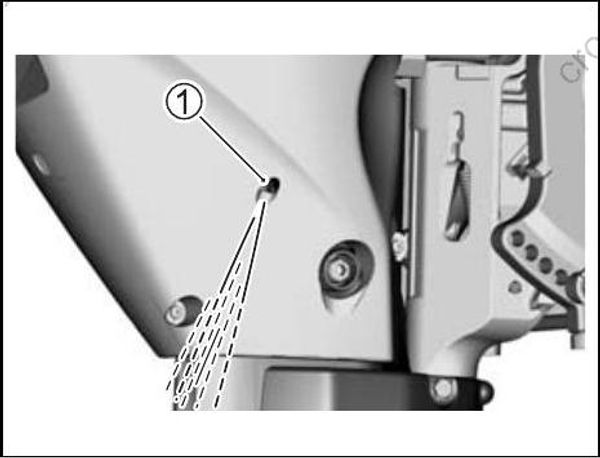
Never operate your outboard motor when there is no water coming out of the pilot water hole, or severe damage can result.
After starting the engine, check to make sure that there is water coming out of the pilot water hole.
Operating the boat when the emergency stop switch is not operating properly can be hazardous.
Before starting off, check to make sure that the emergency stop switch operates properly.
EMERGENCY STARTING
The electric starter models are equipped with a recoil starter as the back-up system for emergency starting. Therefore, an additional emergency starter rope is not provided. If the recoil starter is used for routine starting of the electric starter models, you must obtain a piece of rope to keep in the tool kit, so you can use the following procedure to start the engine in an emergency.
If you must get the engine running, but are unable to do so because of recoil starter failure, you can use the emergency starting procedure to start the engine.
If you touch electrical components when rope-starting the engine, you can get a severe electrical shock.
When rope-starting the engine, be careful not to touch electrical components such as ignition coils or spark plug leads.