


ENGINE STALLING CAUTION SYSTEM
REMOTE CONTROL MODEL
This system informs the operator when the motor stalls while it is operating.
When the engine stalls for any reason, the caution buzzer sounds three times.
OPERATION OF TILTING SYSTEMS (DF25A/25AR)
RELEASE LEVER
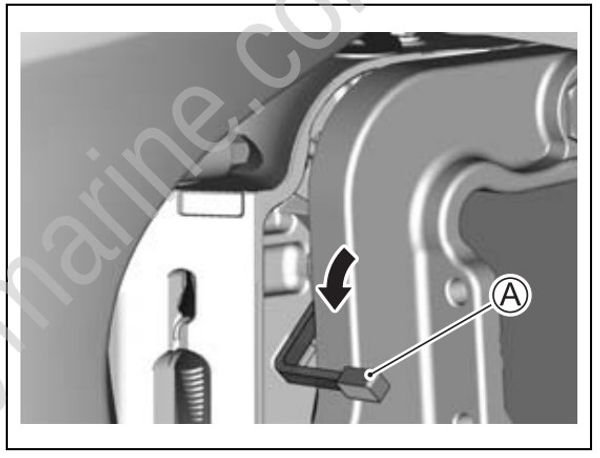
The release lever A has two positions.
“LOCK” Position (DOWN)
Use this position when “REVERSE” gear is engaged and in normal deep water operation where there is no likelihood of striking underwater objects. Placing the release lever in the “lock” position prevents the motor from lifting out of the water due to forces such as propeller thrust during operation in “REVERSE” gear or rapid deceleration.
If you strike an underwater object with the release lever in the “LOCK” position, your outboard motor or boat may be damaged.
When operating the motor in an area where you may encounter underwater objects, move the release lever to the “RELEASE” position and operate the motor only at very low speeds.
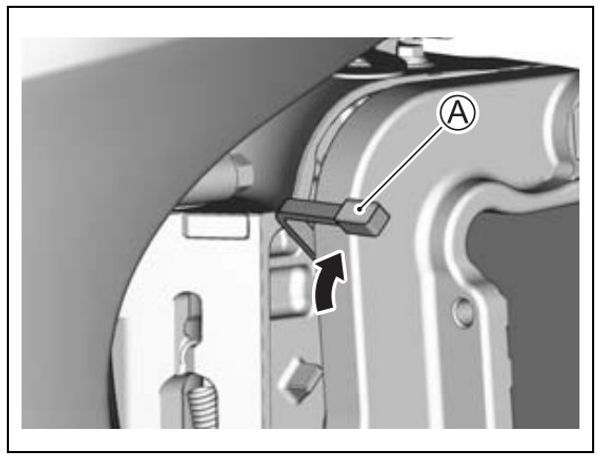
“RELEASE” Position (UP)
Use this position in “FORWARD” gear when unsure of depth or concealed objects. Placing the release lever in the “release” position allows the motor to tilt up if you strike an underwater object, reducing the chance of damage to the motor. Refer to the OPERATION IN SHALLOW WATER section for details on shallow water operation.
When you operate the motor with the release lever in the “Release” position, the tilt lock will not work. As a result, forces such as from propeller thrust during operation in “REVERSE” gear, rapid deceleration, and striking an underwater object can cause the motor to lift out of the water, resulting in personal injury.
When using the “Release” position, proceed with caution and only at very low speed.
TILT UP LOCK ARM
The tilt up lock arm is used to hold the motor in the fully tilted up position.
If you place your hands near the mounting bracket or under the motor when tilting it, your hands can be crushed if the motor slips from your grasp.
Never place your hands near the mounting bracket or under the motor when tilting it.
To hold the motor in the fully raised position:
Shift into “NEUTRAL”.
Move the release lever (1) to the “release” position.
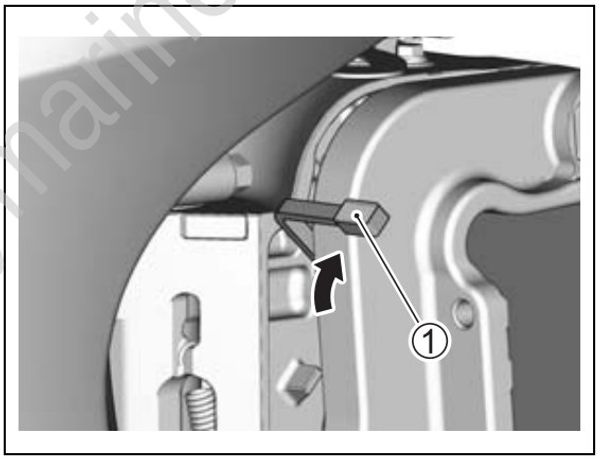
- Grab the handle on the back of the motor cover and tilt the motor all the way up until it is automatically locked in the fully tilted up position by the tilt up lock arm (2).
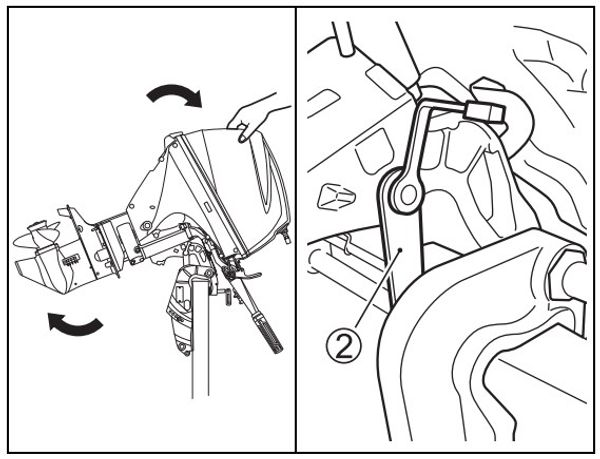
If you use the throttle grip handle to raise or lower the motor, the handle may break.
Never use the throttle grip handle to raise or lower the motor.
To lower the motor back down:
- Move the release lever (1) to the lock position.
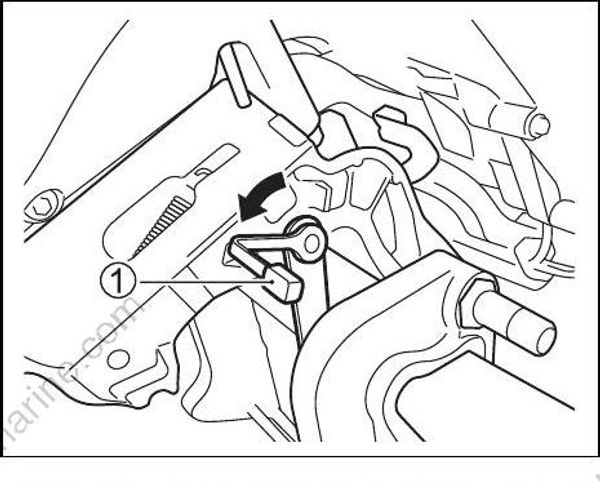
- Pull the motor slightly towards you and slowly let the motor down.
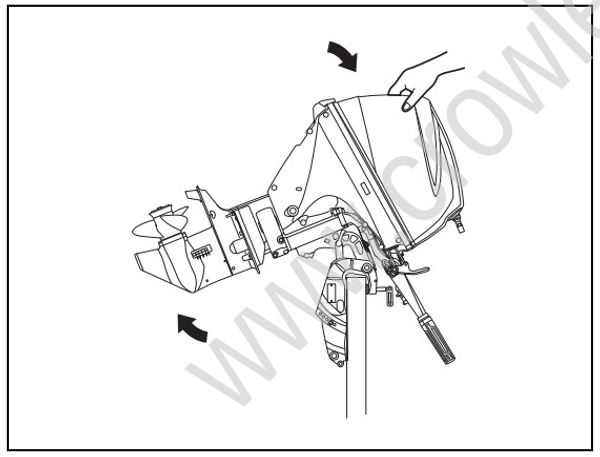
If you do not take proper precautions when tilting up the motor, fuel may leak out.
Disconnect the fuel line whenever you leave the motor tilted up for a long period of time.
If you use the tilt up lock arm to hold the motor in the fully tilted position for trailering, the tilt up lock arm could release resulting in damage to the motor.
When trailering your boat, never use the tilt up lock arm to hold the motor in the fully tilted position.
SHALLOW WATER POSITION
To set the shallow water position:
Shift into “NEUTRAL”.
Move the release lever (1) to the release position.
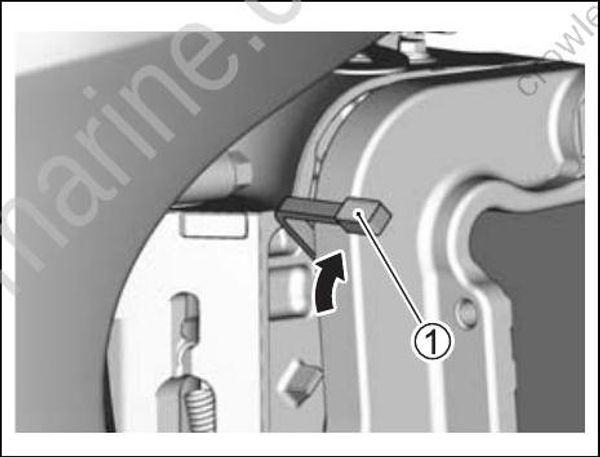
- Slowly tilt the motor up until you hear it make a “click” sound.
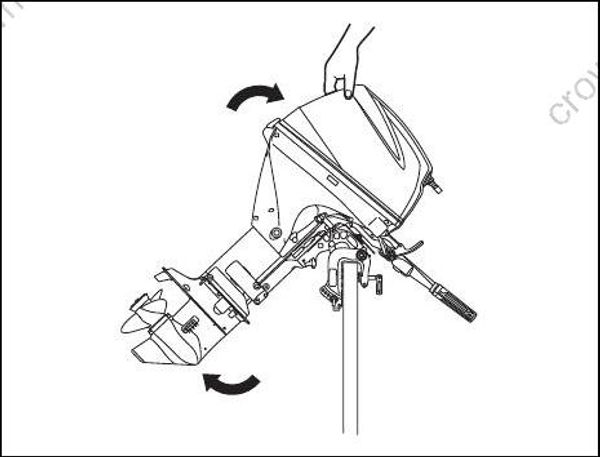
- Slowly lower the motor. It will stop in a position that is slightly tilted up from the normal trim angle.
There are two shallow water positions. Use whichever one is appropriate, depending on the depth of the water.
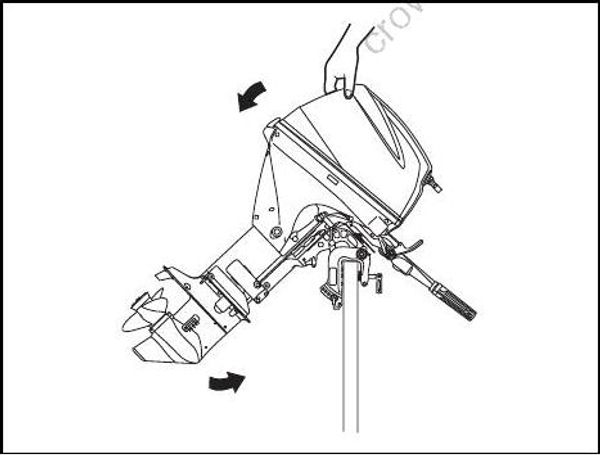
To lower the motor back down:
- Move the release lever (1) to the lock position.
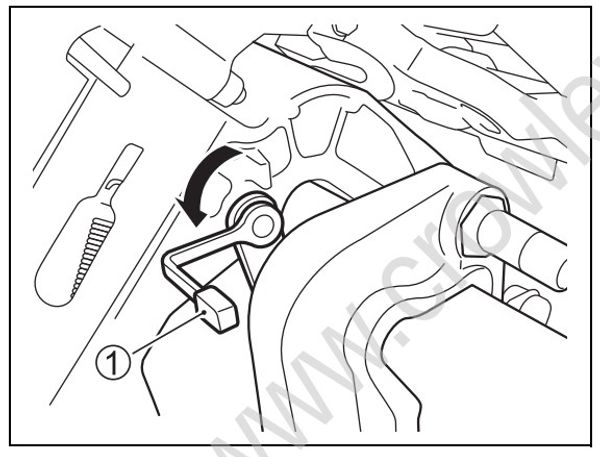
- Pull the motor slightly towards you and slowly let the motor down.
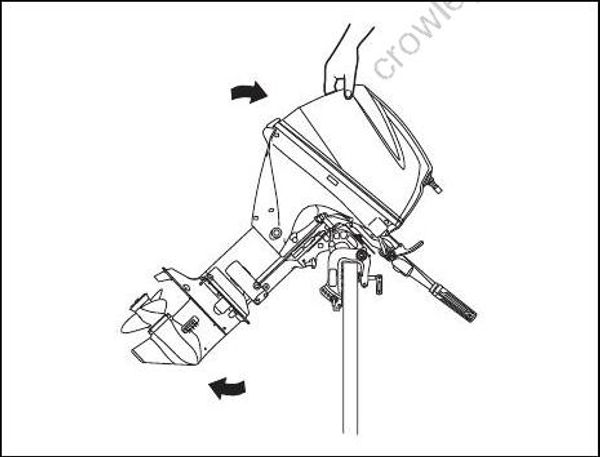
When the shallow water position is used, the tilt lock will not work. As a result, forces such as from propeller thrust during operation in “REVERSE” gear, rapid deceleration, and striking an underwater object can cause the motor to lift out of the water, resulting in personal injury.
When using the shallow water position, proceed with caution and only at very low speeds.